
Pre-purchase exam
Before booking a pre-purchase examination, you will have already assessed the horse yourself and decided that he or she is suitable for the job you wish them to perform.
No purchase of an animal will come without risks, and therefore the purpose of our examination is to provide you with a veterinary perspective of the suitability of the horse for your needs, and to help you reach an informed decision before purchasing.
We do this by assessing the health of the horse on the day it is presented to us, and using our experience to identify and quantify any risks of the horse not fulfilling their intended future role.
It is vital that you communicate your expectations of the horse to us before the exam, as the horse's future role will heavily impact our interpretation of their suitability for you.
Please note that we will be assessing the horse at a single moment in time. While our aim is to identify any potential risks, our assessment on the day cannot guarantee that the horse's condition will not change significantly at a later stage.
When booking, consider the scope and depth of the exam you wish us to perform, as a 2-stage vetting will have limitations in comparison to a 5-stage vetting.
You as the purchaser are very welcome to be present at the examination.

The 2-stage examination
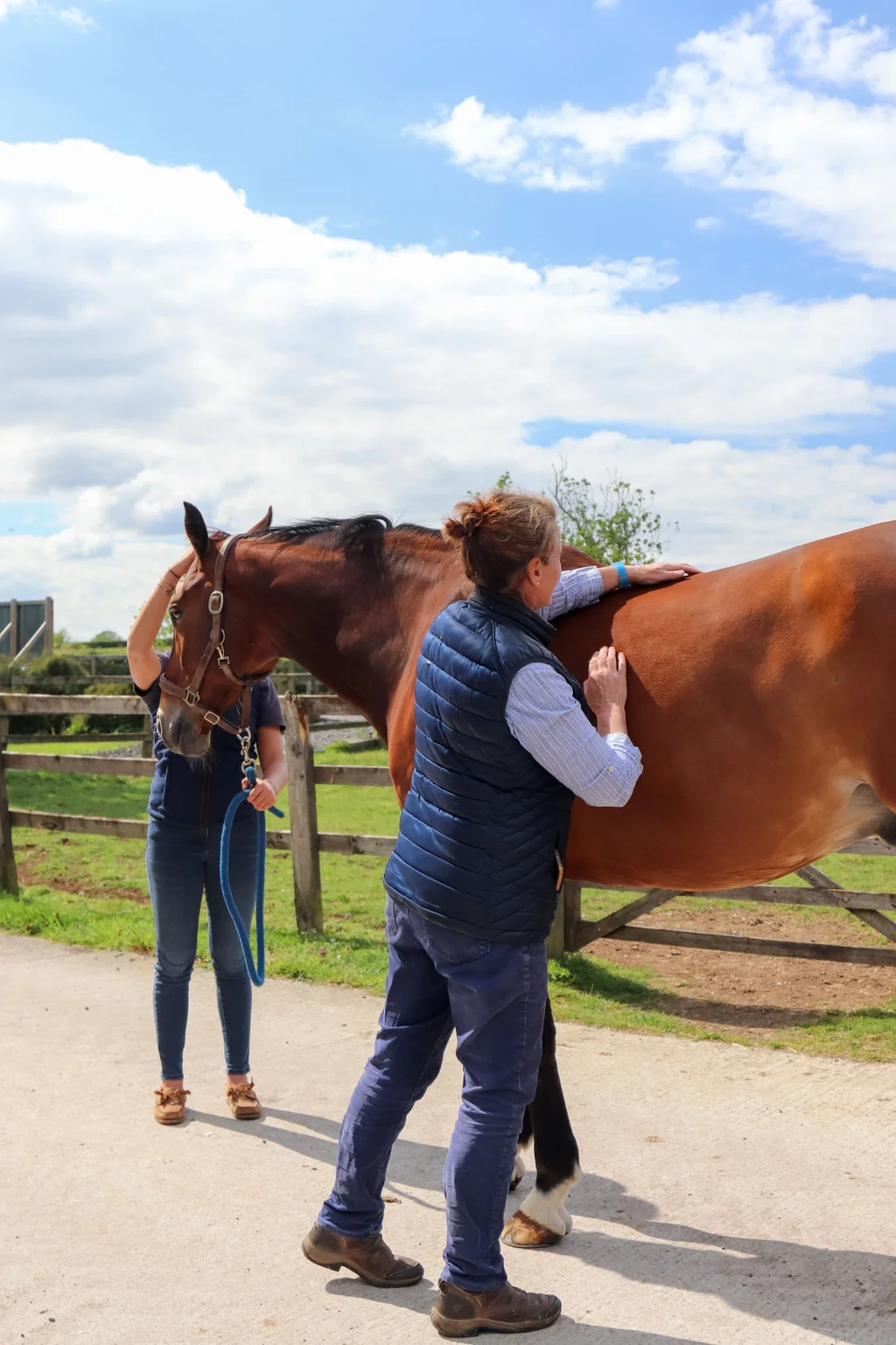
A 2-stage vetting involves a thorough examination of the horse's general health, eyes, heart, teeth, limbs and body. We will palpate the horse to identify any lumps and bumps that may concern us, and also ensure that the horse's passport documentation matches the horse presented to us. The second stage involves a full soundness exam: trotting the horse up on the straight and on the lunge, performing flexion tests if appropriate, and assessing the horse's movement on both hard and soft surfaces.
The 5-stage examination
A 5-stage vetting includes the same first two stages as above, and then goes on to a strenuous exercise test of walk, trot, canter and gallop if appropriate. The vet will assess the health of the horse during and after exercise, including listening for abnormal breathing sounds, the heart rhythm and any other factors impacting performance.
The final stage involves a repeat of the lameness exam with a trot-up, lunge and flexion test depending on the vet's observations so far, to ensure that the findings prior to exercise match those found after exercise.
Blood test and add-ons
All our vettings include a blood test sent to a specific laboratory in Newmarket, on behalf of the Veterinary Defence Society, and stored for six months. The purchaser can request for the bloods to be tested immediately, or at any point within the six-month period for the presence of sedatives, painkillers or other substances if there is a dispute about the condition of the horse after sale.
For insurance purposes, young horses and those owners wanting greater reassurance, it is common to perform additional services. We can offer the following in addition to the pre-purchase exam:
Imaging of the lower limbs is routinely requested and may be a requirement for some insurance policies. Please check your insurance policy for which images are required. We can look for joint disease, injury, foot balance and bone fragments in young horses.
Imaging of the tendons and ligaments of the lower limbs for evidence of soft tissue injury or disease.
Imaging of the upper airways after exercise is occasionally performed.
Pre-purchase exam form
Disclaimer – Please read all of the information provided before completing this form. Completion of this form is an appointment inquiry only, and you will be contacted by one of our vets for confirmation of your appointment. For the purpose of a pre-purchase examination, the vetting cannot be performed by a practice who have an association with the vendor or current owner of the horse to be sold.

